Research

OASIS: Open Infrastructure for Automated Synthesis of AI Models to Hardware

NSF-Funded Research Project | NSF Award #2608702

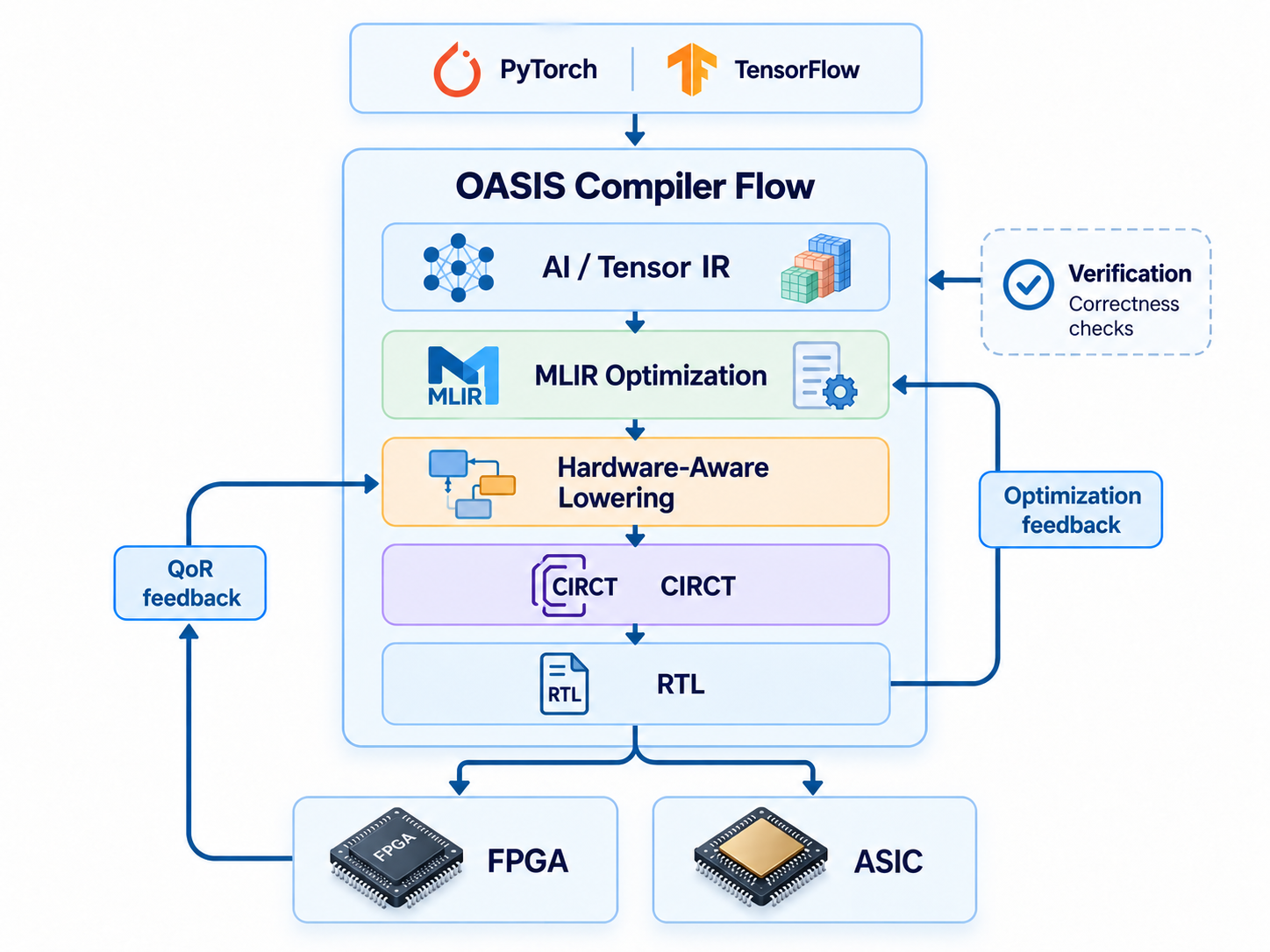
OASIS is an open, end-to-end cyberinfrastructure for automatically translating modern AI models into efficient FPGA and ASIC hardware. The project builds on MLIR and CIRCT to preserve high-level model and optimization semantics throughout the compilation flow, from machine-learning frameworks to hardware-level representations and synthesizable RTL.

Development & Maintenance: Md Mahfuzul Haque Gazi leads the development and maintenance of the OASIS software pipeline at DAC Lab.

AI models to hardwareFPGA & ASICMLIR & CIRCT
OASIS compiler flow from machine-learning frameworks through tensor IR, MLIR optimization, hardware-aware lowering, CIRCT, and RTL to FPGA and ASIC hardware, with verification and optimization feedback

Resilient Real-Time Cyber-Physical Systems

We develop real-time and secure edge computing systems for robotics and smart grids. Our work combines systems research, hardware and software co-design, and cybersecurity to maintain reliable operation under strict timing constraints, faults, and cyber attacks.

In distributed robotic systems, we study how task timing, communication, and security affect responsiveness and coordination. In modern power infrastructure, we investigate real-time monitoring, edge computing, smart-grid analytics, and cyber-attack detection. By processing data close to the physical system, we aim to improve response times and strengthen the resilience of autonomous platforms and energy infrastructure.

Researchers: Md Nafis Tahmid Akhand (robotics and real-time security) and Md Kibria Saroare (smart grids, edge computing, and cybersecurity).

Real-Time SystemsEdge ComputingRoboticsSmart GridsCybersecurity
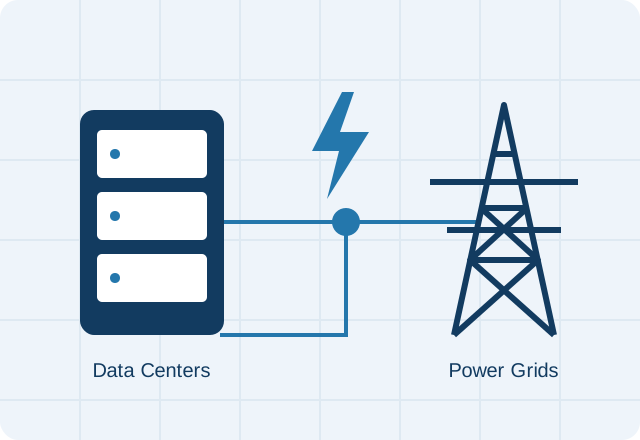
Illustration of a robot with connected sensors and a security shield Illustration of data-center servers connected to a power grid